
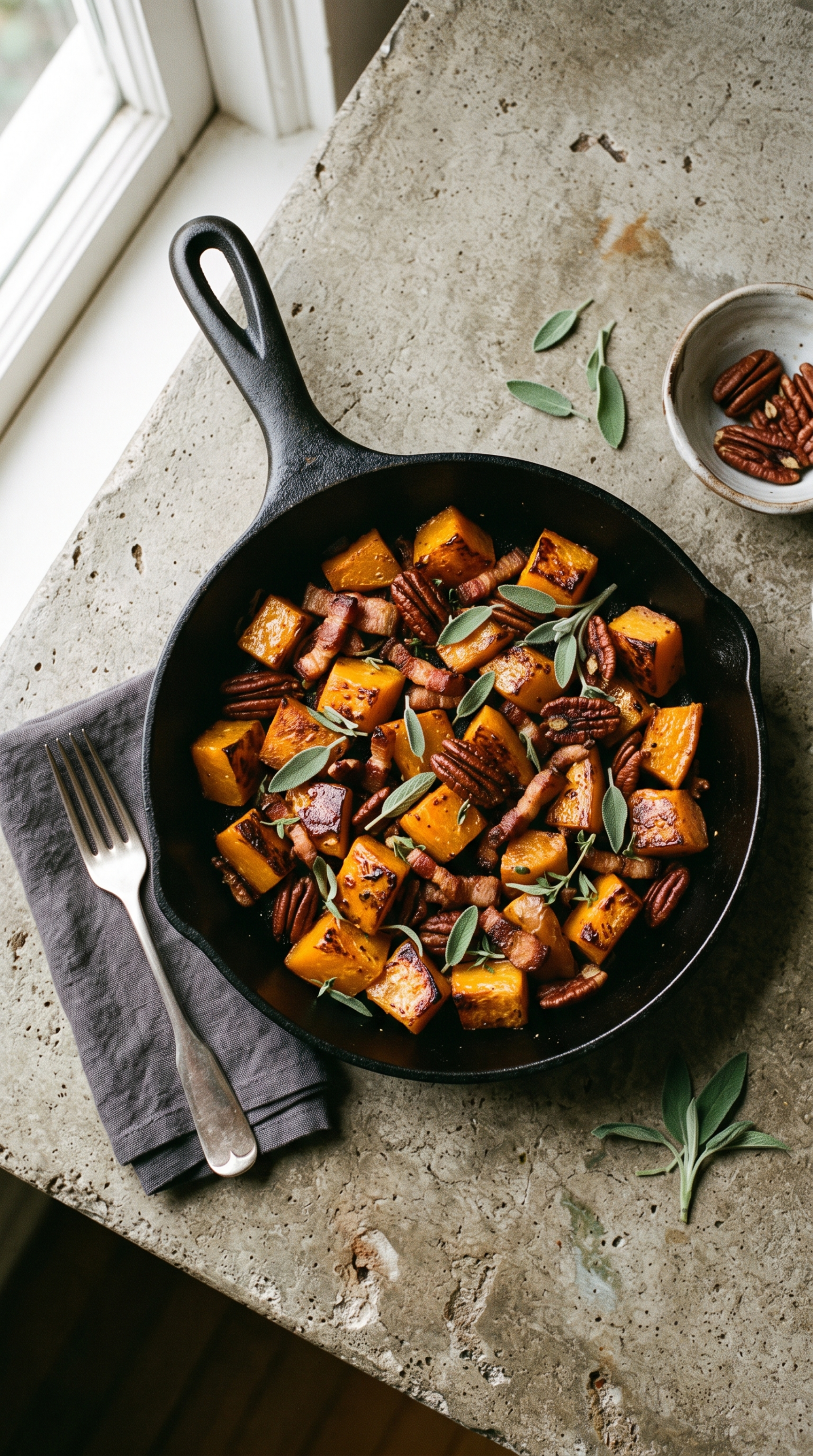
Alright, let’s talk comfort food. Fall and winter hit, and sometimes you just want something warm, sweet, and savory. For a lot of folks, that means some kind of starchy side dish. But what if you could have that comfort, full of flavor, and still keep it primal? That’s where this Roasted Butternut Squash recipe comes in. It’s simple, honest, and tastes like a warm hug. Seriously, if you’re looking for a simple side that punches above its weight, this is it.
You might be thinking, “Butternut squash? Isn’t that a carb?” And yeah, it’s got some carbs. Fun fact, though: biologically speaking, butternut squash is actually a fruit, not a vegetable! Because it contains seeds and develops from the flower of the plant, it falls firmly into the fruit category. But whether you call it a fruit or a veg, it’s a whole food packed with good stuff. We’re talking vitamins, minerals, and fiber. It’s not a processed bag of chips. Done right, with the right fats and additions, it fits perfectly into a primal lifestyle. We’re turning a simple ingredient into something truly special.
Why Roasted Butternut Squash is a Primal Win
First off, butternut squash is a powerhouse. It’s loaded with Vitamin A, Vitamin C, potassium, and magnesium. Good for your vision, your immune system, your blood pressure, you name it. The science backing up this humble fruit is actually pretty incredible:
- Packed with Health-Promoting Compounds: Butternut squash (Cucurbita moschata) is widely recognized as a functional food because it is abundant in carotenoids and polyphenols. You can read the full study on its bioactive compounds and bioaccessibility here on PubMed (PMID: 38254540).
- Fights Chronic Conditions: Research shows that Cucurbita moschata possesses potential anti-obesity, anti-diabetic, antibacterial, and anticancer properties. A comprehensive breakdown of its nutritional and functional properties is available here on PMC (PMC7914307).
- Rich in Essential Minerals & Vitamins: Squash is heavily relied upon for its vitamins (A, B, C) and trace elements like phosphorus, potassium, calcium, and magnesium. A study exploring how these compounds contribute to its high antioxidant capacity can be found here on NCBI (PMC8231950).
- Supports Digestive Health: The high dietary fiber content in squash helps support proper intestinal function and has been linked to a reduced risk of heart disease, obesity, and diabetes. You can check out the research on its dietary fiber and techno-functional benefits here on PMC (PMC12325894).
Plus, it’s naturally sweet, which means we don’t need to add a ton of junk to make it taste good. That’s a win in my book.
Then there’s the roasting. Roasting brings out that natural sweetness and caramelizes the edges, giving you a depth of flavor you just can’t get any other way. We’re talking crispy edges, tender centers. My kids even eat this stuff, which is saying something. It’s real food, prepared simply, and it nourishes you. That’s the whole point of primal living, right?
The Secret Ingredients: Bacon, Pecans, Maple Syrup & Primal Fats
Now, let’s get to the good stuff. The bacon. You need to use good quality bacon here. None of that sugar-cured, mystery-meat stuff. Look for a sugar-free, uncured bacon. The fat from that bacon is going to be our cooking fat. It infuses the squash with an incredible savory depth. This is where you get all that flavor without trying too hard. If you’re serious about cooking with natural fats, grab some good quality, sugar-free bacon. It makes all the difference.
And pecans? Oh man. They add a fantastic crunch and another layer of healthy fats. Plus, they toast up beautifully in the bacon fat. It’s a texture party in your mouth (who cares. Enjoy!). These aren’t just empty calories; nuts are packed with beneficial compounds too. Just remember, a handful is usually enough. Or eat all of them, I won’t judge.
We’re talking about primal fats here, folks. The kind that fueled our ancestors. Bacon fat, especially from good quality pork, is a fantastic cooking medium. Don’t be scared of it. It’s miles better than seed oils, which you should be avoiding anyway. We’ve covered this before, but if you need a refresher on why healthy fats are key, check out my post on cooking with ancestral fats.
How to Make It: 4 Simple Steps
Let’s make this magic happen. You can cook this entire dish in just four simple, follow-along steps:
- Prep the Squash: Let’s be real—peeling and chopping a butternut squash can be a bit of a workout. A good, sharp knife helps. Cut it in half, scoop out the seeds, then peel it. Chop it into roughly 1-inch cubes. Don’t go too small, or it’ll burn. Don’t go too big, or it won’t cook evenly.
- Render the Bacon: Dice your sugar-free bacon and render it in a large oven-safe dish or a cast iron skillet over medium heat. Get it nice and crispy. Pull the bacon out and set it aside, but leave all that glorious fat in the pan. That’s our liquid gold.
- Toss and Coat: Toss your butternut squash cubes and pecans right into that bacon fat. Pour in about 1/4 cup of maple syrup for a perfectly natural, sticky-sweet glaze. Sprinkle generously with cinnamon and sea salt. Give it a good stir to coat everything, then spread it out in a single layer. Pro tip: You don’t want to overcrowd the pan, or it’ll steam instead of roast. We want caramelization, not mush.
- Roast to Perfection: Pop that dish into a preheated oven at 400°F (200°C). Roast for about 25-35 minutes. You’ll want to stir it once or twice during cooking to make sure everything gets evenly browned. Once the squash is fork-tender with beautiful caramelized edges and the pecans are lightly toasted, pull it out. Stir in your crispy bacon bits, taste for seasoning, and serve!
Primal Takeaway
This Roasted Butternut Squash recipe is a perfect example of how you can enjoy comforting, flavorful food that is still deeply nourishing and primal. Don’t shy away from whole-food carbs when they’re prepared with healthy fats and simple, natural ingredients. Eat real food, enjoy the process, and feel good about what you’re putting into your body.
My Primal Kitchen Essentials
If you want to recreate this dish exactly how I make it, here is the gear and the goods I swear by (Note: These are affiliate links, which means I get a small kickback if you purchase through them—thanks for supporting the blog!):
- Lodge 10.25-Inch Cast Iron Skillet: This is the exact skillet I use to render my bacon and roast the squash. It holds heat beautifully and only gets better with age.
- Pure Organic Grade A Maple Syrup: For that 1/4 cup of natural sweetness, make sure you are using 100% pure maple syrup, not the fake, artificially flavored stuff.
- Raw Pecan Halves: Grab a good bulk bag of raw, unsalted pecans so you always have healthy fats on hand for roasting.
Leave a Reply