
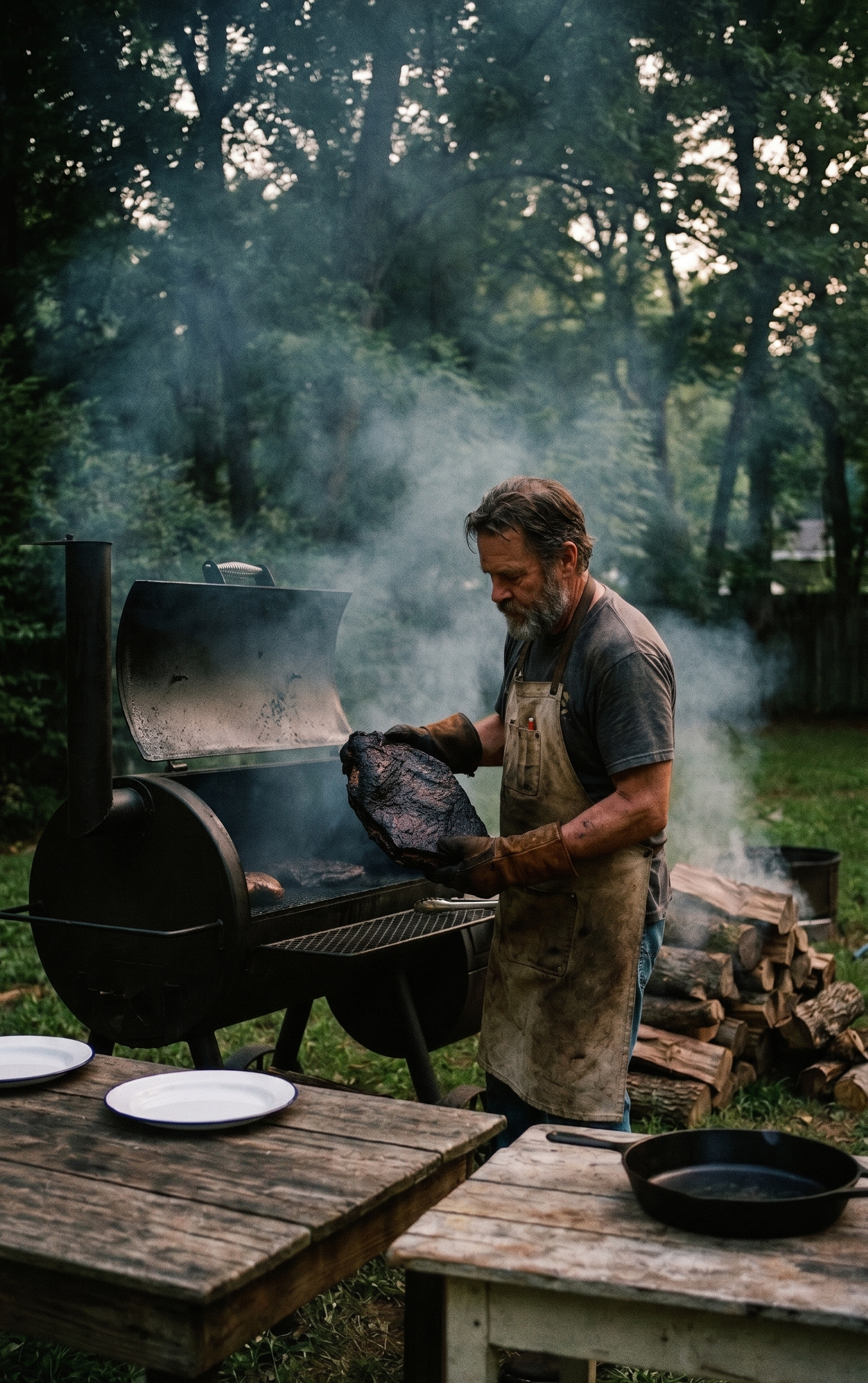
The scent of charcoal smoke curling into the summer sky, the low rumble of a smoker, the promise of a feast – this is the anthem of American independence. On the Fourth of July, we don’t just celebrate freedom; we embody it with fire, community, and an unapologetically primal meal. This year, ditch the flimsy burgers and dry hot dogs. It’s time to command your pit and deliver a masterpiece that feeds the soul and the masses: the ultimate Primal Smoked Brisket. This isn’t just a recipe; it’s a declaration of culinary sovereignty, a testament to patience, and a deep dive into the ancestral art of slow-cooked meat.
The Undeniable Power of Primal Smoked Brisket
Brisket, a cut from the lower chest of the cow, is a formidable challenge and an even more formidable reward. Its marbling, rich with ancestral fats, renders down to an unctuous, flavorful experience unlike any other. Consequently, it’s the ideal centerpiece for feeding a large gathering, a single slab often weighing 10-15 pounds. Furthermore, its preparation demands respect, patience, and a primal understanding of fire and meat. You’re not just cooking; you’re transforming a tough cut into tender, smoky perfection, a culinary alchemy that resonates with our ancient hunter-gatherer roots. Crucially, the slow smoking process not only tenderizes but also infuses the meat with a depth of flavor that is profoundly satisfying.
Forget the notion that red meat is a villain. For millennia, our ancestors thrived on it, building robust bodies and sharp minds. Modern science increasingly supports the fundamental role of animal proteins in human health, providing essential amino acids and micronutrients vital for strength and vitality. Studies consistently highlight the bioavailability of nutrients from red meat, confirming its status as a cornerstone of a truly ancestral diet. Therefore, when you smoke a brisket, you’re not just preparing food; you’re honoring a tradition that has sustained humanity for generations.
Mastering the Smoker: Your Iron Steed
Whether you wield a charcoal Masterbuilt, a kamado grill, or an offset smoker, the principles remain constant: low heat, long hours, and consistent smoke. This isn’t a sprint; it’s a marathon of flavor. The key is to maintain a steady temperature, typically between 225-275°F (107-135°C). As a result, the connective tissues within the brisket slowly break down, rendering fat and transforming muscle into succulent, fall-apart tenderness. Wood choice is also paramount; oak, hickory, or pecan impart a robust, traditional smoke flavor that perfectly complements the rich beef. Avoid lighter woods like fruit woods for brisket; you need something that can stand up to the meat’s intensity.
Furthermore, prepare your smoker with diligence. Clean grates are essential, and ensuring a stable fuel source is critical for uninterrupted cooking. If you’re new to smoking, a reliable Wireless Meat Thermometer is an invaluable tool, allowing you to monitor both smoker and meat temperatures without constantly opening the lid and losing precious heat and smoke. This commitment to precision, coupled with primal intuition, sets the stage for a truly epic outcome.
The Ritual of Preparation: Seasoning Your Canvas
A brisket begins with a precise trim. Remove excess hard fat, leaving about 1/4 to 1/2 inch of soft, pliable fat on the top (fat cap) to protect the meat and render flavor. However, don’t over-trim; that fat is gold. Next comes the rub, the flavor bedrock of your masterpiece. A simple yet powerful rub of coarse sea salt, coarse-ground black pepper, and perhaps a touch of garlic powder is all you need. The ratio is typically 1:1 salt to pepper, applied generously until the brisket looks like it’s been dusted with a dark, flavorful crust. This isn’t a timid sprinkle; this is a full-body massage, ensuring every inch of the meat is coated.
Let the seasoned brisket rest in the fridge for at least 4-6 hours, or ideally overnight. This allows the rub to penetrate and draw out some moisture, creating a better bark later. Consequently, your patience here will directly translate to a richer, more profound flavor profile in the finished product. This dedication to preparation isn’t merely culinary; it’s a warrior’s respect for his provisions, a deep appreciation for the nourishment that sustains us. For more insights on nourishing your body with foundational foods, consider exploring how to build a diet around nutrient-dense foods.
The Long Watch: Smoking and The Stall
Once your smoker is dialed in, place the brisket fat-side up (or down, depending on your smoker’s heat source) and let the smoke do its work. This journey is long, often 12-18 hours or more, depending on the size of the brisket and your smoker’s efficiency. Around the 150-170°F (65-77°C) internal temperature mark, you’ll encounter “the stall.” This is when moisture evaporating from the brisket’s surface cools the meat, causing the temperature to plateau. Don’t panic, and don’t crank the heat. Patience is vital. You can power through it, or you can “wrap” the brisket in butcher paper or foil to push through faster.
Wrapping can accelerate the cook and help retain moisture, resulting in a more tender brisket. If you wrap, add a splash of beef broth or melted Grass-Fed Beef Tallow to the wrap for extra richness. Continue cooking until the internal temperature reaches 200-205°F (93-96°C) and probes tender like “warm butter” in multiple spots. Proper cooking temperatures are crucial for both food safety and achieving optimal tenderness in meat, transforming collagen into gelatin for that melt-in-your-mouth texture. This careful management of heat and time is what distinguishes a true pitmaster.
The Primal Takeaway
Finally, and perhaps most crucially, remove the brisket from the smoker and let it rest, still wrapped, for a minimum of 1-2 hours, or even longer in an insulated cooler. This resting period allows the muscle fibers to relax and reabsorb juices, ensuring a moist, tender slice every time. When it’s time to slice, go against the grain for maximum tenderness. Serve this glorious Primal Smoked Brisket with simple, honest sides: fresh seasonal fruit, a crisp cabbage slaw, or perhaps some roasted root vegetables. This Fourth of July, ignite the fires, embrace the smoke, and honor the primal tradition of feeding your tribe with a feast worthy of patriots. It’s more than a meal; it’s a declaration of freedom, flavor, and fortitude.
Leave a Reply