


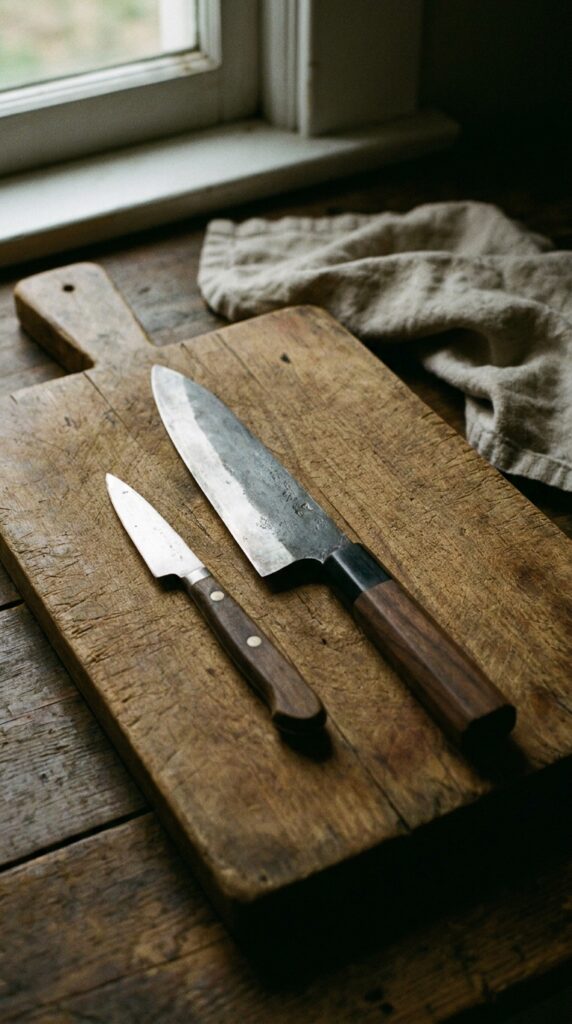

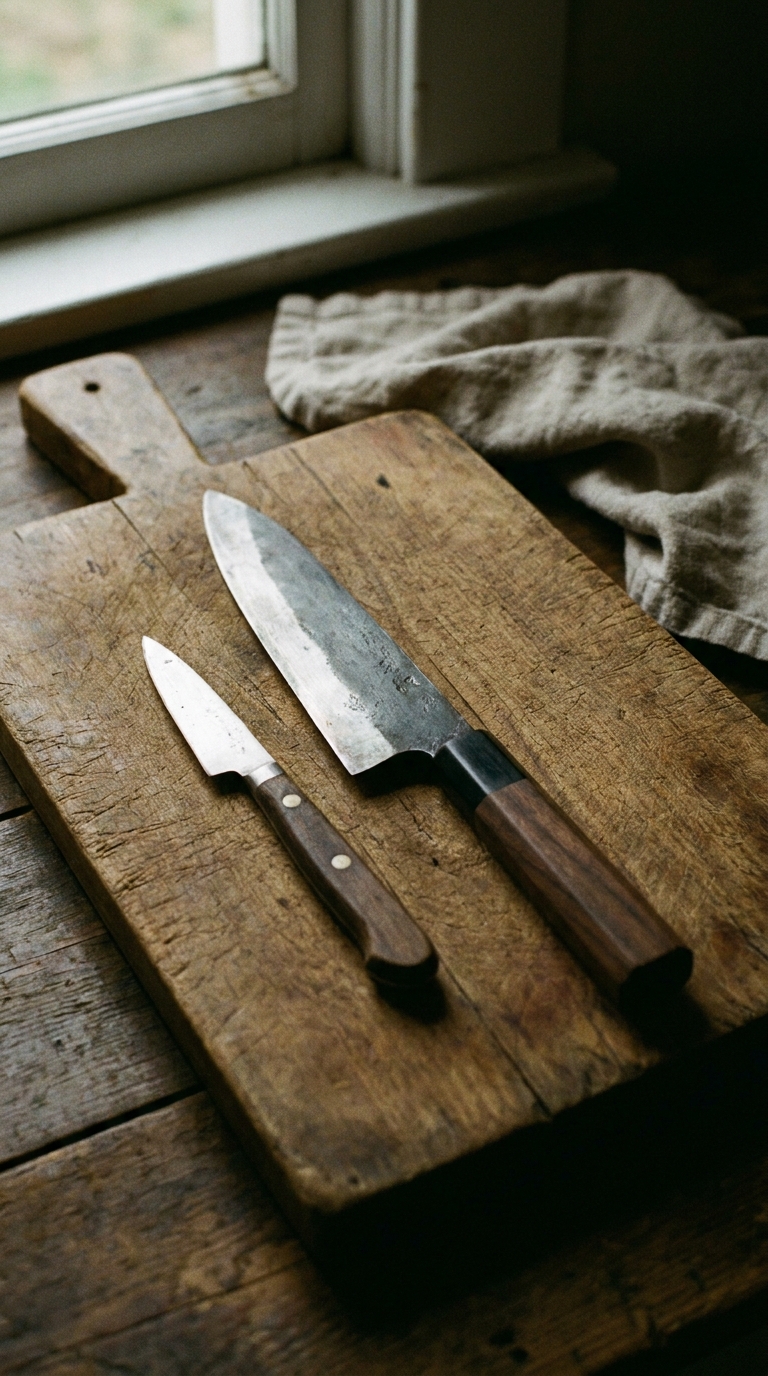
Walk into any kitchen store, and you’ll see walls of knives. Fillet knives, bread knives, boning knives, cleavers, santokus, utility knives. It’s enough to make your head spin. You don’t need all that. Seriously, don’t buy into the marketing hype. When it comes to essential kitchen knives, you really only need two. Maybe three if you get fancy with steak night (but you do you). For 99% of your home cooking, a good chef knife and a trusty paring knife will handle everything. That’s it. Simple, right?
Why Two Knives Are Enough for Your Kitchen
I’m not a gourmet chef. I’m a guy who cooks real food for his family. And in my experience, the more gadgets you have, the more cluttered your kitchen gets and the more confusing cooking becomes. Complexity kills consistency. We want simple. We want effective. A chef knife is your workhorse. It does 80% of the heavy lifting. Slicing meat, dicing onions (I’m still slow at that, no judgment), chopping vegetables. It’s the MVP. Your paring knife is for the smaller, more delicate jobs. Peeling an apple, trimming a strawberry, mincing a clove of garlic. Think of them as Batman and Robin for your cutting board.
You don’t need a separate knife for bread. A good chef knife can handle crusty loaves just fine with the right technique. You don’t need a boning knife unless you’re butchering whole animals every week (and if you are, hats off to you, but most of us aren’t). Focus on quality over quantity. Two great tools beat ten mediocre ones any day. These are the truly essential kitchen knives you’ll actually use.
What Makes a Good Chef Knife?
Okay, so you need a chef knife. But what kind? Don’t get hung up on brand names too much. What you’re looking for is a few key characteristics. First, the blade material. High-carbon stainless steel is usually the way to go. It holds an edge well and resists rust. Don’t fall for “ceramic” blades unless you like brittle tools that chip easily.
Second, the balance. This is huge. Pick up the knife. Does it feel heavy in your hand? Is it weighted nicely between the blade and the handle? You want it to feel like an extension of your arm, not some awkward club. A well-balanced knife makes chopping less tiring and more precise. Third, the handle. It should feel comfortable and secure. No slippery plastic, please. Riveted handles that are full tang (meaning the metal extends through the whole handle) are generally more durable. This isn’t just about comfort; it’s about safety too. You want a firm grip when you’re working with sharp objects. A good chef knife should last you years, even decades, if cared for properly. Quality truly matters here. For tips on how to prepare great meals without relying on processed ingredients, check out my post on cooking with good fats.
Keep ‘Em Sharp, Always
This is arguably the most important tip about knives: keep them sharp. A dull knife is dangerous. Seriously. You have to apply more pressure, and that’s when it slips and cuts you. A sharp knife glides through food with minimal effort, reducing the risk of accidents. It makes cooking more enjoyable, too. Nobody likes struggling through a tomato with a dull blade (it just squishes, right?).
How do you keep them sharp? You don’t need fancy electric sharpeners if you don’t want them. A simple honing steel will realign the edge regularly, and a good quality manual sharpener will bring back a true edge when needed. Don’t overthink it. Just sharpen them often. Weekly if you cook a lot. More often if you notice them dragging. Studies actually show that sharp knives reduce accidents in the kitchen by requiring less force and maintaining control. It’s worth the five minutes. It’s part of taking ownership of your health, even in the small things. After all, cooking at home is one of the best ways to improve your family’s health.
Randall’s Pick: A Solid Sharpener for Your Essential Kitchen Knives
Instead of specific knives, because what feels good to me might not feel good to you, I’ll recommend what keeps any good knife good. A quality sharpener. You can spend a lot of money on knives, but if you don’t maintain them, they’ll become useless. This good quality manual knife sharpener is a solid, no-frills option that gets the job done. It’s easy to use and will ensure your chef knife and paring knife are always ready for action. Sharpen them often, and they’ll serve you well for years.
“Okay, Randall, but I need to know what two knives to get.”
I hear you. If you don’t want to overthink the specifications and just want me to tell you exactly what to add to your cart, go with Wüsthof. They perfectly nail the high-carbon stainless steel, full-tang construction, and ideal balance I just talked about. If I were outfitting a kitchen from scratch today, I’d grab the Wüsthof Classic 8-Inch Chef’s Knife for the heavy lifting and the Wüsthof Classic 3.5-Inch Paring Knife for the detail work. Buy these two, treat them right, and you’ll never need to buy another knife again.